The 90s Wrote the Rules
The short version: the Y2K look isn't nostalgia for a decade — it's a set of behaviors that cheap cameras forced on people. One hard flash, a short lens, a card that ran out, and a screen too bad to judge anything by. Those constraints wrote habits, the habits became a style, and every imaging generation since has re-imported the style while quietly dropping the constraints that made it. That's why the revival never finishes.
Most of the people driving this right now were toddlers in 2003, or weren't born. You cannot be nostalgic for a party you didn't attend. So whatever is going on with digicams, disposables and hard-flash photos, it isn't memory — it's a response to a property the images have and current ones don't.
We've covered the optics elsewhere: what a 2003 compact actually did to a photo, and why the revival is peaking now. This is the other half. Not what the camera did to the picture — what the camera did to the photographer.
The five constraints that mattered
Strip the era down and a consumer camera imposed five rules, none of them chosen by anyone:
- One flash, pointed straight ahead. Not a choice. A xenon tube next to the lens, on or off.
- A short, slow lens. If you weren't close, you weren't in the photo.
- A card or a roll that ran out. Every frame cost something, even if the cost was small.
- A screen too small and too bad to evaluate anything. You couldn't really tell whether the shot worked until you were home.
- No edit step. The image went from card to Photobucket, or to a lab, or to a burned CD. What the camera made was what everyone saw.
Constraints wrote habits, and the habits are the actual style
This is the part people miss when they try to fake the era with a color grade. The look isn't in the color. It's in what those five rules made everyone do:
- Shoot at night, indoors. The flash made a dark room photographable at all, so that's where the camera came out — kitchens, basements, back seats, hallways.
- Get uncomfortably close. Flash falls off a cliff at about six feet, so the whole era is shot from arm's length, badly framed, with someone's shoulder in the corner.
- Take one and move on. Nobody shot fifteen and picked. There was no picking.
- Hand the camera to whoever was nearest. Which is why so many group photos of that era are framed by a person who did not care.
- Point it at nothing in particular. The camera was out, so it recorded the boring parts — the walk, the fridge, the taxi. More on that in the camcorder shot list.
That's a grammar. It's not a filter, and it's why a perfectly graded modern photo of a well-lit dinner still reads as modern.
What each generation since kept re-importing
The interesting thing isn't that the look came back. It's that it never fully left — each wave kept a different piece of it.
The first social platforms ran on it directly, because everyone was still using those cameras: the mirror shot with the flash blowing out the glass, the party album uploaded raw, forty near-identical frames of a kitchen. Same machine, new distribution.
Then phones got clean sensors, and the industry's very first instinct was to dirty them again. The initial wave of mobile filters was, almost without exception, a simulation of consumer film and cheap optics — vignettes, light leaks, blown highlights, borders. Within about a year of finally getting a decent camera in every pocket, the most popular thing to do with it was make the output look worse in a specific, historical way.
Then disposables at weddings — people paying real money to reintroduce scarcity and unreviewability on the most heavily photographed day of their lives, on purpose, alongside a professional shooting thousands of frames.
Then social apps that made the constraint into a product rule: fire the flash, no retakes, no editing, post it. That's not an aesthetic decision, it's rule three and rule five turned into software.
And now, twenty-year-old compacts selling for prices that make no sense against their specifications, because the specifications were never the point.
The thing the phone actually removed
Not quality. Consequence.
Nothing is scarce, nothing is final, nothing goes out unreviewed. Every photo is a draft — you shoot a burst, you check it, you reshoot, you crop, and the version anybody sees is the survivor of a small selection process. And a draft can't be evidence. It's a proposal about how the night went.
The era people keep raiding produced evidence, because it had no mechanism for producing anything else. That's the whole inheritance. Every generation since has grabbed the visual symptoms — the flash, the grain, the date stamp — and left the mechanism behind, which is exactly why the revival keeps needing to happen again.
Which parts you can get back, honestly
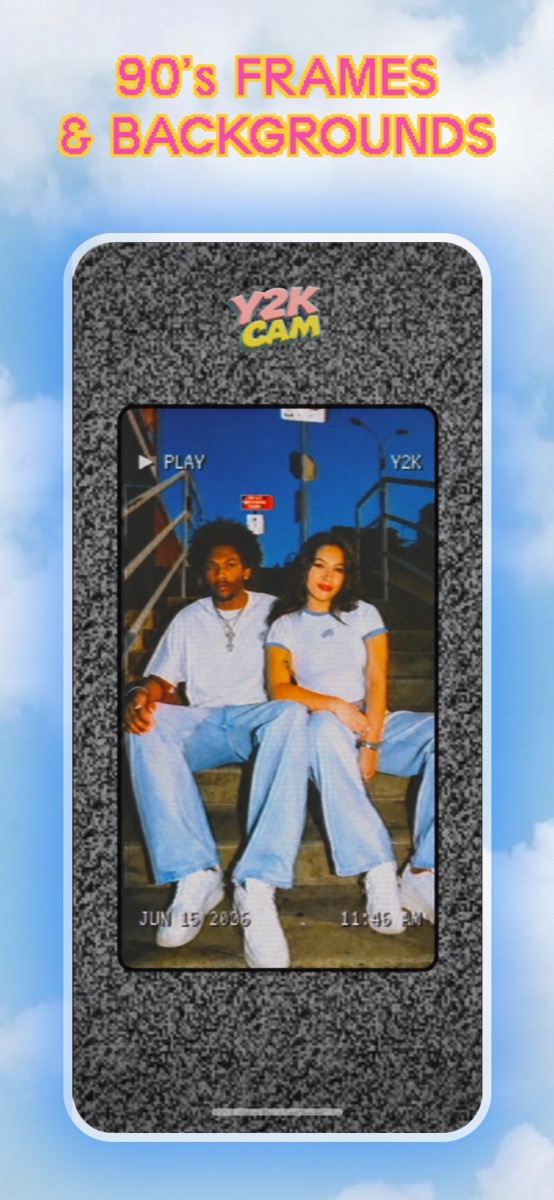
- Reproducible in software: the sensor and compression failures, the color casts, clipped highlights, low resolution, and a burned-in date stamp. These are math, and they're faithful.
- Partly reproducible: the flash. Software can harden the falloff, but an LED is not a xenon tube — shooting in a genuinely dark room does more of the work than any slider.
- Not reproducible at all: scarcity, finality, and the social license to point a camera at nothing. No app imposes those. You do, or nobody does.
How to actually inherit it
- Night, indoors, flash on. The conditions the old cameras were worst in are the conditions that made the look.
- Within six feet. Standing back gives you a modern photo with grain on it.
- One frame. Don't check it. This is the rule everyone skips and the one that matters most.
- Photograph the boring parts. The fridge, the walk, the back seat. Those are the photos that survive.
- Don't grade it afterwards. Get the look while shooting — see the Y2K filter guide and the 2000s photo effect — and then leave it alone.
Why nobody has rewritten them
Because that era wasn't trying to invent an aesthetic. It was trying to take a decent photograph of a dark room and failing in five consistent ways. Nobody has since proposed a better set of rules for photographing a night with your friends — every improvement since has been an improvement in fidelity, and fidelity was never what those pictures were doing.
The machines are gone. The rules aren't, and each new generation finds them again the hard way.
iPhone · iOS 17+ · live retro looks with burned-in date stamp